
Wednesday, October 28, 2026 | Today's Newsletter | Login
Top 10 Places to Visit in Asia This Winter
By Mata Press Service
Winter is Asia's most rewarding travel season, because the continent offers two completely different trips at once. In the north, Japan and China turn into snow country, with powder skiing, hot springs and festivals built from ice. In the south and southeast, December to March is the dry season: clear skies, lower humidity and the best beach and temple weather of the year.
This list mixes both. Five picks are about sunshine, three are about snow and culture, and two are city-and-heritage trips that are simply at their most comfortable now.
1. Hokkaido, Japan
Japan's northern island is the benchmark for a snowy winter trip. Niseko, Rusutsu and Furano get some of the lightest, driest powder snow on earth, and the season runs from December to April. Between ski days, soak in an outdoor onsen while snow falls around you, then eat miso ramen, fresh crab and soup curry in Sapporo.
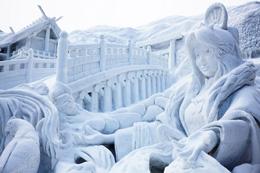
The highlight is the Sapporo Snow Festival, confirmed for 4–11 February 2027 across three sites: giant snow sculptures in Odori Park, clear ice carvings in Susukino and snow play at Tsudome. Entry to all three is free. The nearby port town of Otaru usually lights its canal with candles during the same week for its Snow Light Path.
Tip: festival week is Sapporo's busiest and most expensive time of year, so book hotels as soon as your dates are fixed. Bring proper snow boots; February averages about −2 °C.
2. Harbin, China
Harbin, the "Ice City" of northeast China, hosts the world's largest ice and snow festival. Its centrepiece, Harbin Ice-Snow World, is a park of full-sized castles, towers and slides carved from blocks cut out of the frozen Songhua River. At dusk the whole park lights up in colour, which is when it looks most extraordinary.
For 2026–27 the park is expanding to a record 1.25 million square metres, with more than 1,000 ice and snow structures planned. Pair it with the giant snow sculptures at Sun Island and the traditional ice lanterns of Zhaolin Park. Harbin's Russian-influenced old town, with its onion-domed St. Sophia Cathedral and Central Street, adds a European feel.
Tip: the park usually opens in mid-to-late December and runs until the thaw in late February; the 2026–27 opening date has not been announced yet. Temperatures regularly drop below −20 °C, so serious thermal layers are essential.
3. Rajasthan, India
Rajasthan is a scorching desert state for much of the year, but from November to February its days are warm and sunny and its nights cool. That makes winter the ideal time to explore its palaces, forts and colourful bazaars.
A classic loop takes in Jaipur, the "Pink City", with the Amber Fort and Hawa Mahal; Udaipur, whose white palaces sit on calm lakes; and Jodhpur, beneath the vast Mehrangarh Fort and its blue-painted old town. Push west to Jaisalmer for a golden sandstone fort and a night under the stars in the Thar Desert. Many travellers add Agra and the Taj Mahal, which is best seen at sunrise on a clear winter morning.
Tip: desert nights can drop close to freezing, so pack a warm layer. Staying in a converted haveli or heritage palace hotel is one of the best-value luxuries in Asia.
4. Chiang Mai, Thailand
Northern Thailand's cool season, roughly November to February, brings fresh mornings, sunny afternoons and blue skies. It is the most pleasant time to be in Chiang Mai, a relaxed city of more than 300 temples inside an old, moated wall.
Spend mornings at Wat Phra That Doi Suthep on its mountainside, browse the Sunday Walking Street market, and take a Thai cooking class. Beyond the city, visit ethical elephant sanctuaries, hike in Doi Inthanon National Park, Thailand's highest peak, or ride the winding road to laid-back Pai. The Chiang Mai Flower Festival, usually held on the first weekend of February, fills the streets with floral parades.
Tip: Chiang Mai is affordable and well connected, which makes it a good base for a slow trip. Combine it with a week on Thailand's southern beaches, which are also in their dry season.
5. Siem Reap and Angkor, Cambodia
The temples of Angkor are among the world's great archaeological sites, and November to February is the best time to see them. The rains have ended, the moats are full and the heat is at its most bearable.
Watch sunrise over the five towers of Angkor Wat, then explore the giant stone faces of the Bayon and the tree-strangled ruins of Ta Prohm. Further out, the pink sandstone carvings of Banteay Srei are some of the finest in Southeast Asia. Siem Reap itself has a lively riverside, good restaurants and the acclaimed Phare Cambodian Circus.
Tip: buy a three-day Angkor pass rather than one day, so you can pace yourself and visit the major temples early or late, when the light is softer and crowds are thinner. Hiring a tuk-tuk driver for the day is cheap and easy.
6. Southern Vietnam and the Mekong Delta
While northern Vietnam is grey and chilly in winter, the south is dry, sunny and warm from December to April. Ho Chi Minh City is the energetic starting point: street food, rooftop bars, the Ben Thanh Market and the sobering War Remnants Museum.
From there, head into the Mekong Delta for floating markets, fruit orchards and homestays along palm-lined canals. Finish on Phu Quoc island, whose west-coast beaches have calm seas and spectacular sunsets at this time of year. The Central Highlands town of Da Lat, with its pine forests and cool air, makes a refreshing detour.
Tip: Tet, the Vietnamese Lunar New Year, falls on 6 February 2027. Cities glow with flower markets and lanterns, but many businesses close for several days and transport sells out, so plan travel around that week.
7. Sri Lanka
Sri Lanka packs beaches, ancient cities, tea country and wildlife into an island smaller than Ireland. Its south and west coasts are at their best from December to March, when the monsoon has moved to the east.
Start in the Cultural Triangle, climbing Sigiriya's fortress rock and visiting the cave temples of Dambulla and the sacred city of Kandy. Then take the famously scenic train through the tea plantations of Nuwara Eliya and Ella. Finish on the south coast: whale watching off Mirissa (December to April is peak season), surfing at Weligama and wandering the ramparts of colonial Galle Fort. Yala National Park offers one of the world's best chances of seeing a wild leopard.
Tip: book the Kandy–Ella train seats well ahead; reserved carriages sell out quickly in high season.
8. Palawan, Philippines
Palawan is regularly ranked among the world's most beautiful islands, and its dry season, from December to May, brings the calm, clear water that makes it shine. Expect limestone cliffs rising from turquoise lagoons, white-sand coves and some of Asia's best snorkelling.
El Nido is the headline: island-hopping boat tours visit the Big and Small Lagoons, hidden beaches and Secret Lagoon. Coron, further north, is known for crystal lakes such as Kayangan and for diving on Second World War Japanese shipwrecks. Near Puerto Princesa, the Underground River is a UNESCO World Heritage Site you explore by paddle boat through a cathedral-like cave.
Tip: the Underground River requires a permit with a daily cap, so reserve it in advance. Travel between El Nido and Coron by ferry rather than backtracking by air.
9. The Maldives
For pure relaxation, the Maldives is hard to beat, and December to April is its dry northeast monsoon season. That means the most sunshine, the calmest seas and the best underwater visibility of the year.
The country is a chain of 26 coral atolls in the Indian Ocean. Most visitors stay on a private resort island, often in an overwater villa, and spend their days snorkelling house reefs, diving with manta rays and whale sharks, or simply lying on powder-white sand. Sunset dolphin cruises and sandbank picnics are classic extras.
Tip: the Maldives is not only for luxury budgets. Guesthouses on local inhabited islands such as Maafushi and Thoddoo cost a fraction of resort prices and still reach the same reefs, though alcohol is not served on local islands.
10. Hong Kong
Hong Kong's winter is dry, sunny and mild, usually around 15–20 °C, which is ideal for a city that rewards walking. It is also the season of festive lights, from the Christmas displays along Victoria Harbour to the city's exuberant Lunar New Year.
Ride the Star Ferry across the harbour, take the Peak Tram up Victoria Peak for the skyline, and eat your way through dim sum halls and Temple Street Night Market. Winter is also prime hiking season: the Dragon's Back trail and the MacLehose Trail offer sea views just minutes from the city. Lantau Island's Big Buddha and the stilt-house fishing village of Tai O make an easy day trip.
Tip: for Lunar New Year 2027 (6 February), don't miss the night parade and the harbour fireworks the following evening, but book hotels months ahead.
Leave a comment