
Tuesday, November 03, 2026 | Today's Newsletter | Login
How B.C. can make Our Schools Better
Commentary
By Michael Zwaagstra
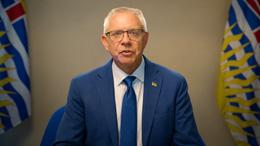
Now that the ballots have been counted, British Columbia voters have elected a new government. Conservative leader Lorne Doerksen will be sworn in B.C.’s 38th premier.
Doerksen no doubt wants to create a positive legacy for himself and his government. He should start by enacting policies that will reverse B.C.’s steep educational decline.
Of course, the easy thing for any government to do is simply announce spending increases. If there’s one thing that trustees and teacher union leaders agree on, it’s that the B.C. government needs to spend more money on public education.
However, spending on public education is going up in B.C., not down. After adjusting for inflation, B.C. spent $2,097 more per student in the 2023/24 school year (the latest year Statistics Canada data is available) than it did ten years earlier. And yet, student performance in B.C. continued to decline.
According to the Programme for International Student Assessment (PISA), reading scores in B.C. declined by 25 points from 2018 to 2025 (the latest year of PISA data). For context, PISA equates 20 points to approximately one grade level, which means B.C. students are more than one full grade level lower in their reading skills than they were eight years ago.
And during the same period, math skills in B.C. declined by 14 points, which means that B.C. students are more than half a grade level lower in their math skills than they were in 2018.
These poor reading and math scores are unacceptable—but they are hardly surprising.
In 2016, the previous Liberal government introduced a new curriculum that put less emphasis on subject-specific knowledge and focused instead on themes such as “critical thinking,” “creativity,” and “communication.” Reducing the amount of content that students are expected to learn was a surefire way to lower educational standards.
Unfortunately, the NDP continued full steam ahead with this disastrous new curriculum after it was elected in 2017. With the new curriculum now in place for a full decade, the evidence is clear that students are receiving a lower quality of education. The new government should move quickly to scrap the failed 2016 curriculum changes and adopt curriculum guides that place an appropriate emphasis on subject-specific content knowledge.
In addition, Doerksen’s new government should bring back course-based standardized final exams in high school. Until about 10 years ago, all B.C. students wrote knowledge-based exams that were mandatory for graduation. These exams were an important way of holding teachers accountable and ensured that the entire prescribed curriculum was taught in each course. These exams also made it possible to identify which schools were performing well and which ones were not.
Bringing these exams back would bring B.C. in alignment with Alberta, which has long required Grade 12 students to write diploma exams in most high school courses. The education that students receive in B.C. should, at the very least, be equivalent to what students in Alberta receive, since Alberta students regularly outperform B.C. students on the PISA tests. Course-based standardized exams are an essential measurement tool.
Another important reform would be to scrap the NDP government’s decision to replace percentage and letter grades with nebulous phrases such as “emerging,” “proficient,” “extending,” and “developing.”
Not only are these new phrases difficult for students to understand, but a 2024 Leger poll showed that most parents do not understand them either. As a case in point, two-thirds of parents were unable to pick the correct definition of “extending” out of a list of options. Any grade that over half of parents cannot understand does not belong on a report card.
Scrapping the NDP’s confusing grading system and restoring percentages and letter grades would send a strong signal that B.C.’s new government values proper communication with parents. When it comes to obvious policy changes, scrapping the new B.C. report cards is low-hanging fruit.
In short, the new Conservative government must send a strong signal that it has a laser-like focus on academic excellence. Improving curriculum guides, bringing back course-based standardized exams, and restoring percentages and letter grades on report cards are policies the new government must implement if it is serious about improving schools for the better.
B.C.’s new Premier Lorne Doerksen has a prime opportunity to make schools better. He needs to act quickly and decisively.
Michael Zwaagstra is Senior Fellow at the Fraser Institute.
Leave a comment